Monday, September 02, 2013
Chemical blame game over Syria disguises the real issues
Wednesday, January 02, 2013
'Fiscal cliff' deal robs US workers
Monday, November 05, 2012
A democracy with an extremely small ‘d’
Tuesday, June 19, 2012
Poverty and inequality: the real State of the Union
Monday, June 04, 2012
Obama plays God
Monday, May 23, 2011
Obama's warning to Israel falls on deaf ears
President Obama’s latest speeches on
Anti-war protesters will gather tomorrow outside
As the Stop the War Campaign points out,
But simply to note this would be to miss out on new realities unleashed by the revolutions of the Arab Spring and its effects on the struggle of the Palestinians for self-determination.
Thousands took part in the May marches throughout the
Israeli border police troops fired on protesters in an attack which drew international condemnation. Despite 11 fatalities and scores of injuries, Palestinians are continuing to prepare a large-scale march for June 5.
This, combined with the demand for statehood which the Palestinians are taking to the United Nations in September, is the tumultuous background to Obama’s call on
After meeting with Israeli prime minister Benjamin Netanyahu last week and the American-Israel Public Affairs Committee (AIPAC), Obama refused to back down from his insistence that peace negotiations must focus on
While this is not a new position for US presidents, with Obama proposing “mutually agreed land swaps” in support of a two-state solution, it has nonetheless aroused fury in the Zionist camp.
A
While Obama is desperately trying to adapt to the Arab Spring, at the same time fearing its consequence in countries like
Palestinian leaders from Hamas and Fatah do not themselves agree on the proposal to return to the 1967 borders. And they currently face a boycott against their monopoly of politics by eight Palestinian groups affiliated to the PLO who have withdrawn from the negotiations to form the unity government recently agreed in
The head of Fatah’s press office, Issam al-Halabi has rightly noted: “Politicians are following the people. They don’t have much say, the people are doing everything and this is a turning point in the Palestinian struggle to return, which has recently surprised everyone.” Palestinian negotiators should take advantage of these popular movements to “back up their stance during negotiations”, he believes.
Two things need to be said. One is that Netanyahu’s immediate rejection of Obama’s reference to pre-1967 borders killed off negotiations before they began. Secondly, exploiting the sacrifices of Palestinian youth in
When Obama told the AIPAC that “we cannot afford to wait another decade, or another two decades, or another three decades to achieve peace” because the world “is moving too fast”, he was actually keenly aware of the truth.
He was, in effect, warning the Israeli ruling class that its days – similar to the position that the apartheid regime in
Corinna Lotz
A World to Win secretary
Monday, April 18, 2011
Assad in the firing line on the road to Damascus
On Friday, tens of thousands protested against President Bashar al-Assad’s brutal regime in Aleppo, Suweida, Deraa and near Damascus on Syrian Independence Day. At least 22 are said to have been killed when security forces opened fire in Deraa.
The anti-government movement has deepened the crisis of the 40-year-old Assad dynasty. It is disrupting the mosaic of national, religious, ethnic, and oil politics together with big power interests. In response to the power of Friday’s Day of Rage, al-Assad promised to lift Syria’s emergency laws which have been in force since 1962.
To add to complexities, yesterday saw the publication of US embassy cables, released by WikiLeaks .They reveal that the US State Department has been promoting various “civil society strengthening initiatives”, such as the Movement for Justice and Development to the tune of $12m between 2005-2010.
The US has had an on-off relationship with Damascus over the decades, partly because of its anti-Zionist stance and partly because it is viewed as a cat’s paw for Iranian interests in the area. At the same time, the Bush administration used Syria to torture people as part of its “extraordinary rendition” programme. The US re-opened relations with Syria in 2010, appointing a ambassador to Damascus for the first time for five years.
In a desperate measure to satisfy protesters, al-Assad promised to lift the emergency laws that have ban gatherings of more than five people by Monday 25 April. Assad took over after his father Hafez al-Assad, who died in 2000, continuing the “hereditary dictatorship” that has kept Syria under the grip of state security forces. Amongst other authoritarian measures, the regime banned Facebook in attempts to stop anti-government blogging. In desperate moves to cling on to power he has been firing ministers and making promises and concessions (at least on paper) over the last couple of months.
But even while pledging to lift the state of emergency, al-Assad threatened: “We will not tolerate any attempts at sabotage.” So far over 200 people have been killed during the unrest, including four in the last 24 hours. Many were murdered by pro-regime thugs wielding revolvers, stun guns and batons.
Al-Assad and his brutal secret police will no doubt seek to exploit the WikiLeaks revelations to discredit those seeking reforms and/or to topple his regime. Like his fellow tyrants in the region, Assad seeks to rally support against his opponents by painting them as agents of foreign oppressors.
But rather than revealing the power of US imperialism, WikiLeaks cables actually show the state of disarray within Washington’s ruling circles, the divisions between the presidency and covert operations machinators. The US wants to maintain its cosy relationship with the feudal Saudi monarchy and keep the oil flowing, but at the same time manipulate the rulers of less powerful states like Syria, which they see as unreliable and too close to Iran.
It is not an unwillingness to sacrifice and even risk death that holds back the the hundreds of thousands who have espoused the cause of the Syrian revolution. They include, amongst others, the Youth of 4-5 February movement, the Syrian Days of Rage and the Syrian Revolution Facebook which has nearly 120,000 followers.
US support for the anti-regime movements in Syria as elsewhere in the Middle east and north Africa has produced a sorcerer’s apprentice. No one is truly in control. In Egypt, the army has arrested former president Mubarak in a desperate bid to retain control of the revolution. In Libya, the West’s intervention has helped create a stalemate and tainted the opposition to Gaddafi. The challenge for revolutionary forces is to create a secular Pan-Arab leadership that can unite the masses and build for the next stage of the Arab Revolution, whose aim has to be social revolution.
Corinna Lotz
A World to Win secretary
Thursday, January 06, 2011
“A system-wide” problem indeed
On April 20, 2010, the disaster killed 11 workers, seriously injured many others, and spewed over four million barrels of oil into the Gulf of Mexico for nearly three months, creating the largest oil spill ever in American waters.
President Obama set up a commission to investigate the causes. The first part of its report published today acknowledges: “Whether purposeful or not, many of the decisions that BP, Halliburton, and Transocean made that increased the risk of the Macondo blowout clearly saved those companies significant time (and money).”
Although this conclusion is somewhat buried amidst lots of talk about “management failure” in terms of bad communications and so on – it is inescapably the overriding cause of the disaster.
The panel found that mistakes and "failures to appreciate risk" compromised safeguards "until the blow-out was inevitable and, at the very end, uncontrollable". BP's "fundamental mistake", the panel wrote, was failing to exercise proper caution over the job of sealing the well with cement.
"Based on evidence currently available, there is nothing to suggest that BP's engineering team conducted a formal, disciplined analysis of the combined impact of these risk factors on the prospects for a successful cement job," the report reads.
The report lists a host of engineering mistakes and management failures. These include flawed procedures for securing the well and an ineffective response to the blowout once it began.
What the report also reveals is a cosy relationship between government regulators and the oil industry. The agency responsible was understaffed and didn't have the inspectors and technical analysts “who were up to the task fully."
Commission co-chair William K. Reilly said the inquiry had asked whether it was a case of a single company, BP, that “blundered with fatal consequences”, or a more “pervasive problem of a complacent industry”, adding: “I reluctantly conclude we have a system-wide problem.”
Bob Graham, former Florida governor and a co-chairman of the commission, said the findings showed the blow-out was in fact avoidable. "This disaster likely would not have happened had the companies involved been guided by an unrelenting commitment to safety first," he said.
But even he must know that the oil corporations – like any other capitalist business – are guided first and foremost by a commitment to shareholders, to the bottom line, to returns on capital invested. To profit.
Paul Feldman
Communications editor
Monday, August 16, 2010
Petraeus deepens Obama's problems
In an NBC television interview, Petraeus said that Obama’s 2011 target date for withdrawal was dependent on conditions permitting. The general’s open defiance comes as the US occupation is suffering its the highest level of casualties since it invaded Afghanistan in 2001.
But it is not only the Afghan people and the US troops killed on the battlefield or on the roads of Afghanistan who are bearing the brunt of the war. When combat troops return home, increasing numbers cannot cope with the psychological after-effects of seeing the carnage inflicted not only by the Taliban but by their own side.
In descriptions of mental trauma reminiscent of the long-term effects on US veterans from the Vietnam war, Time reporter Mark Thompson says that the US army faces a “third front” – trying to rescue its own soldiers from insanity. Soldiers are seeking mental health support more than 100,000 times a month.
One in every 10 soldiers who has completed a single combat deployment has a mental ailment, Thompson has found. The rate rises each time a soldier is redeployed. “More than 500,000 troops have returned home to the US in the last decade with a mental illness,” Thompson estimates.
The result is that suicide rates in the army have been rising. Despite a $7 million expenditure on hi-tech facilities like Fort Campbell, near Nashville, Kentucky, home to the 101st Airborne Division, suicides there have continued to rise.
Not only do they suffer mental breakdowns, but soldiers - and even more significantly – their carers, have turned their weapons on themselves and their superiors. Last November, after a killing spree at the Fort Hood military facility in Texas, Army psychiatrist Major Nidal Hasan was accused of killing 13 people. Hasan, who received medals for service in the Gulf war, had specialist training in the treating traumatic stress at the US armed forces University of the Health Sciences.
But the physical and psychological fall-out amongst his troops, will not deter Petraeus who shows typical disdain for the poor bloody infantry who do the dirty work, and pay the price, while the generals screw up on a consistent basis. Speaking in his Kabul headquarters, he said that he would resist any large-scale or rapid withdrawal of American forces.
Petraeus let the cat out of the bag about the real reason for the continuing US-UK occupation of Afghanistan. He said the country had the potential to become a "new Silk Road", a crossroads for trade, especially in minerals: "Afghanistan is blessed with the presence of what are... trillions of dollars' worth of minerals”.
Behind Petraeus stands the military-industrial complex – the US and global corporations anxious to exploit the lithium and oil resources. The oil corporations’ appetites will have been whetted by an announcement by the Karzai regime that a survey has found a rich new oil field in the north of the country.
The military top brass are deepening the crisis for Obama, whose approval ratings continue to slide. In advance of the November mid-term elections, around half the country disapproves strongly of the government.
Obama appointed Petraeus after sacking Commander General Stanley McChrystal in June. This was after McChrystal had openly attacked the administration in an interview published by Rolling Stone magazine. To have one general defy your government may be regarded as a misfortune; but to have two in quick succession ready to counter the commander-in-chief in public looks like carelessness.
To have all this happen while the US economy continues to tank and a series of rabid right-wingers in and around the notorious Tea Party challenge the authority of the state itself, might be considered to be a dangerous cocktail.
Corinna Lotz
A World to Win secretary
Monday, August 02, 2010
The American dream is a nightmare of foreclosures
Artist Emily Kennerk has created a 22-hour video installation which shows an image of every home foreclosed in 2009. (Foreclosure is the legal process whereby a bank or lender obtains a court order that terminates the borrower’s right of redemption. It is harsher than repossession).
Describing her installation, Kennerk says as you walk around the town you can’t help but see “this ghost town is forming around you. It’s broader than Las Vegas. This is the first generation that’s going to have to deal with the death of the American dream”.
More than four million US homes have been repossessed in the past three years. A website currently lists 2,304,257 foreclosed properties in the US. In the state of Nevada where unemployment stands at 14%, more than six out of ten of all home sales are currently from foreclosures.
At the start of the sub-prime mortgage crisis, back in September 2008, the US Treasury took the mortgage giants Fannie Mae and Freddy Mac into government “conservatorship”. These two mortgage corporations were set up under Roosevelt’s New Deal during the Great Depression of the 1930s. Along with Ginnie Mae (the Government National Mortgage Association) they currently guarantee $5 trillion in US mortgages and 96.5% of all newly originated mortgages in the US.
So far the government has injected $145 billion into them to cover their losses. The mortgage market now is almost a wholly owned subsidiary of the United States government, according to former Federal Reserve chairman Paul Volker. "Almost all the mortgages made now are insured by the government, bought by the government, and the guys at Fannie Mae and Freddie Mac are the market . . . It’s clear Fannie Mae and Freddie Mac need to go. "
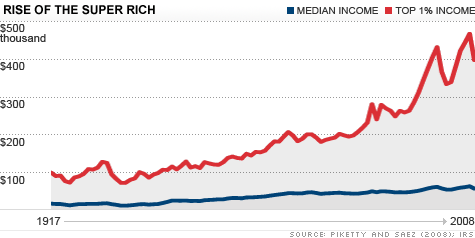
But the US is not only affected by a housing crisis. The malaise goes far, far deeper. Three trends have come together. Economists estimate that the annual incomes of the bottom 90% of Americans have risen only 10 per cent in real terms over the past 37 years while the incomes of the top 1 per cent have tripled.
Thus, a “slow economic strangulation”, which began well before the Great Stagnation, now means that income mobility is declining just as inequality rises sharply. Even families with a gross joint income of $70,000 per year, are only “a pay check or two from the streets” as one Minneapolis worker puts it. Medical expenses are a nightmare. Even families on twice the US median joint income have to borrow heavily to have essential, life-saving operations.
Arthur Miller’s 1949 play, Death of a Salesman, dramatised the anxieties arising from US Great Depression of the 1930s and the reliance on credit to provide necessities. During the Cold War years, such plays were seen as an attack on great American dream. But in today’s Great Stagnation, following the years of easy debt-fuelled consumer credit, which analysts call the “Great Moderation”, it’s certainly not playwrights who are pricking the dream-bubble.
The inability of the capitalist system, not only to ensure the fundamental necessities of life, but the very notion of a positive future is self-evident. Cities and states are staring at bankruptcy while trillions of government dollars have failed to revive the economy. As American comedian George Carlin quipped: “It’s called the American Dream because you have to be asleep to believe in it.”
Corinna Lotz
A World to Win secretary
Wednesday, June 16, 2010
Oil spill goes global
Now, more than two weeks into the capping operation, around 45,000 barrels are still poisoning the seas, destroying wildlife and wrecking livelihoods – and there is no prospect of stopping the flow. It is on track to become the worst oil spill since the first Gulf War in 1991, which spilt around six million barrels.
This worsening catastrophe does not just symbolise the intertwined ecological, economic, social and political consequences of capitalist production and distribution. It is at the centre of the universal crisis that is now changing the way of life of every person on the planet. The explosion was by no means an unforeseeable accident. The drive for growth to sustain profits produced a global economy lubricated by increasing amounts of credit and debt and fuelled by oil. As the oil became harder to extract, costs escalated, profits were hit and corners cut.
During the Congressional hearing of the Subcommittee on Energy and the Environment, in the US House of Representatives yesterday, Chair Ed Markey dismantled attempts by the other oil companies to isolate BP. He and other House Democrats ripped into the chiefs of oil companies for filing bogus oil-safety reports before drilling new deep-sea wells, saying they are no better prepared for an offshore disaster than BP. Congressional investigators found that all five of the nation’s major oil firms filed virtually the same safety report prior to drilling new wells - right down to citing a long-dead expert who could be called in the event of an emergency.
The economic consequences are resounding around the world. The highly lucrative local fishing industry has been closed down. Tourism is melting away. BP’s market value has declined by more than 40% since the Horizon drilling rig blew up. The value of pension funds dependent on BP’s profits is dropping like a stone. The mess on Florida’s beaches is heating up the campaign to seize BP’s assets and there are indications that the global corporation is exploring ways to protect its US operation through bankruptcy proceedings.
President Obama’s speech last night, broadcast from the Oval Office, was largely about the need to wean the US off of its addiction to oil. His attempt to divert attention from his inability to do anything effective about the spill not only failed to convince anyone but, according to many commentators, actually worsened the political crisis. As the Financial Times put it ‘And there was something in it to frustrate or antagonise virtually every stakeholder who was listening.’
In his response to BP’s testimony, Ed Markey eloquently expressed the contradiction at the heart of the crisis: “BP is more concerned about minimising its ‘liability’ for the costs of the clean-up than for the ‘livability of the Gulf’ ”.
But the US Congress is no more able to act to stop the destructive actions of global corporations like BP than it is to regulate the financial institutions that arrogantly straddle the world.
The moment has arrived for a new kind of politics and a new kind of democracy based upon collective stewardship of the planet we depend upon. Now is the time for a qualitative change in our relationship with nature. Let’s begin the job of reconstructing democracy from the bottom up through the building of an international network of People’s Assemblies.
Gerry Gold
Economics editor
Monday, March 30, 2009
Being anti-capitalist is only a start
Whatever efforts are made at the G20, it’s apparent that even if the participants agree on stricter regulation of the global financial system, the proverbial cat is out of the bag. In fact, those taking part have already said as much. The German chancellor Angela Merkel spoiled the party on Saturday when she said that no deal would reached and that the summit “will naturally not solve the economic crisis either”.
Gordon Brown hopes that “this crisis can be dealt with by us acting internationally” and by the assertion of “sounder principles”. Only in his dreams. The notion that those overseeing the global economy can and will redress “global imbalances” is clearly cloud-cuckoo land. In reality, the world economy is on a knife-edge. Financier George Soros, the sage and self-appointed Cassandra of financial capital has warned that if the G20 does not insulate developing countries “against a calamity that is not of their making” the world will slide into slump. Soros does not appear over-confident about the outcome.
The most significant question is not “imbalances” between the richer and the developing countries, but the nature of capitalist production and ownership itself. The relentless drive for profit through unsustainable growth is at the root of the current crisis. Obviously, the G20 capitalist club is not in a position to address this issue! As A World to Win said in the flyer we distributed at Saturday’s “Put People First” march in London:
“Those who created the crisis are part of the problem, not the solution. The global crisis is a great opportunity to make a dramatic change and create for the first time a society where the majority actually come first over the narrow interests of profit. Ordinary people should plan for a future based on co-operation not competition, co-ownership and not private ownership, and for meeting social need not the demands of bankers and shareholders.”
The mass support for the protest march, organised by the Trades Union Congress and supported by a host of other organisations, which was joined by workers from across Europe, was significant despite the futile appeals to the G20 leaders put forward by march organisers. The response – estimated at around 35,000 even by the police which means it was far higher – shows that people are willing to take to the streets to defend their living standards
In Germany tens of thousands marched in Frankfurt and Berlin. It was, as comedian Mark Thomas also noted, the first time that people have had a chance to come out on the streets in a big way. Thomas called for it to be “the start of a grassroots movement”.
The key issue is where that movement should go? This is the question that must be raised at the camps and actions organised by ecological and direct action groups in the City and at alternative summits organised by students this week. Brown is right about one thing – the crisis is forcing change. That change has to be on terms that benefit society and the planet as a whole, however. Our Charter for Democratic Rights suggests how we can achieve the revolutionary transformation required. Sign it, spread the word, and join A World to Win in its aim of going beyond anti-capitalist propaganda to creating a practical alternative.
Corinna Lotz
AWTW secretary
Tuesday, March 04, 2008
The railroading begins
In Ohio, one of the industrial heartlands of the country now hit by the impact of globalisation, just 14% of workers are organised in trade unions. The division is between the older, skilled and white collar unions like the American Federation of Teachers and the machinists’ union who support Clinton on the one side, and the Service Employees International Union (SEIU) which draws considerable support from African Americans on the other.
Unions like the SEIU, the powerful Teamsters Union, Unite Here (hotel workers) and the United Food and Commercial Workers broke away from the AFL-CIO [TUC] in 2005 to form the Change to Win coalition. With a few exceptions most of the Change to Win unions support Obama, with some key industrial unions like the United Steelworkers and the United Auto Workers remaining neutral. Most of the Change to Win unions see Obama’s ability to rise from obscurity and mobilise large numbers as an inspiration to breathe life into union recruitment, which, as in the UK, has been in general decline.
Surprisingly large numbers of Americans have become involved in political debate through the Clinton-Obama battle. Obama’s rhetoric, however empty most of the time, has given some expression to the underdog in American politics. Obama has cleverly crafted his politics to tap in to the disenchantment with the politics of the old establishment. In many states, Obama’s campaign seems to have come from nowhere to challenge Clinton’s veterans. Young first-timers as well as older volunteers are staffing offices in obscure towns, using laptops and the Internet to co-ordinate the campaign and mobilise support.
But we’d better not get carried away by the image-makers. Despite his claim to being a new broom that will sweep clean, there is no way Obama will truly challenge the real power behind the presidency in the United States. He has no intention of overturning the military-industrial complex behind Bush and his global wars.
Yet we can already feel the railroading into supporting the Democrats coming on. It’s sobering to observe how an anti-corporate campaigner like author Naomi Klein takes it for granted that Guardian readers will back Obama, making bleating pleas that he should use his campaign to stand up against “islamophobia” and take seriously his mission to “repair the world”.
The one candidate who has consistently challenged the corporations, Ralph Nader, is already under fire from liberals like Joshua Holland of the AlterNet Independent Media Institute. After demonstrating that – counter to Democratic Party propaganda - Nader was not responsible for handing over victory to Bush in Florida or elsewhere in 2000, and that he has the right to run, Holland then goes on to say that he won’t be voting for him, on the grounds that as an “independent liberal”, he needs to “beat down the reactionary right”. Another supposedly independent thinker, Timothy Noah of Slate takes a similar stance, saying that he disagrees with Nader that the Democrats and Republicans are too similar.
To say that we know the Democrats are grim but the Republicans are even grimmer is a truly hopeless political perspective. It seeks to force voters to remain within the two-party cycle, where Tweedledum and Tweedledee take turns in running the country on behalf of corporate power. After all, it was the Clinton presidency that opened the door for Bush and it is the Democrats who in Congress, despite their majority in both houses, sit on their hands and allow Bush free rein. As Nader once said, if the Democrats are indeed the lesser of two evils, they are still evil!
Corinna Lotz
Secretary, A World to Win
Thursday, February 07, 2008
Democrats tried and trusted
The last time the Democrats were in power under Bill Clinton, they managed to grind the aspirations of their supporters down so far that George W. Bush was able to steal a tainted victory in 2000 and the rest, as they say, is history. Should either Hillary Clinton or Barack Obama win in November, don’t hold your breath. Obama is vacuousness itself while Clinton is all things to all people.
The Democratic Party is one of America’s two parties of big business, taking turns with the Republicans to command the state. This is best illustrated by its record when last in office and voting records in Congress since Bush has been in power. During the Clintons’ presidency (she played a crucial policy-making role), the administration:
- abandoned the promise of universal health care in the face of hostility from the big insurance companies
- signed the North American Free Trade Agreement with Mexico which saw a fall in wages of US workers and the export of jobs to non-union, cheap-labour border areas
- created the World Trade Organisation in 1994 as the policeman of the corporate-driven globalisation project
- bombed Serbia in 1999 and tightened the screws on Iraq through sanctions, creating the precedent for Bush’s subsequent invasion of Iraq
- presided over the jailing of more black people than under the previous Reagan administration
- allowed inequality in America to grow to record levels.
Out of office, the Democrats have performed no better. The vast majority in Congress backed the authoritarian measures such as the Patriot Act introduced by Bush following the September 11 attacks. They authorised the invasion of Afghanistan, inflicting more misery on that country and have backed the so-called “war on terror” which has demonised Muslims all over the world.
All but a handful – of which Obama is one in contrast to his opponent – endorsed the invasion of Iraq. Even after winning majorities in both houses of Congress in 2006, the Democrats have declined to force Bush’s hand in Iraq by calling for an end to the occupation. This is consistent with the party that brought the world the horrific war in Vietnam, the attempted overthrow of Castro in Cuba and other military adventures.
There is clearly a thirst for change in America, which is reflected in the primary campaigns in which record numbers have taken part. Support for Obama in the primaries is strongest amongst the most impoverished sections in society as well as new generations of voters. Obama has galvanised the grass roots of the party and raised his funds mainly from individuals while Clinton represents the establishment and is dependent on big-money funders. Ultimately, however, Obama’s role is to send the desire for change down safe channels while Clinton wants to contain change altogether. With the economic recession beginning to bite, if either wins the election, they will face an increasingly angry American electorate that demands radical change in deeds rather than words. And that will be way beyond what the Democratic Party can offer.
Paul Feldman
AWTW communications editor
